I design the small machinery of connection.
How do strangers become friends?
I've explored that question through four products.
Five years turning social science research into products at Harmony Labs, six years designing public spaces at Meta, and since then my own games and apps.
We are over-connected with weak ties and under-connected with deep ones. One deep conversation is worth more than a thousand likes.
The complaints about social platforms are known: negative, noisy, and lacking substance. That is two separate problems with two separate causes. The bickering comes from too much communication before any trust exists. The lack of substance comes from too many shallow connections at once, because depth requires someone focused on you, and a crowd can't do that.
Connection isn't a feature you add to a crowd. It's a sequence you design. Everything below is that sequence in a different shape.
Heist
Trying to make a friend online is like trying to make a friend in an airport bathroom. There might be nice people in there, but the incentives are shit.
In Heist you pick a real world activity you want to rob (attend) and you're paired with a partner in crime who also wants to go. A playful AI Heist boss finds what you have in common, draws out your stories, and widens the conversation as trust (and the discount $) builds. Then it gets out of the way so the two of you can meet in person and pull off the heist.
Nearly every chatbot is built to be a companion to one person. This one sits between two, and its job is to be a fun mutual friend and leave.
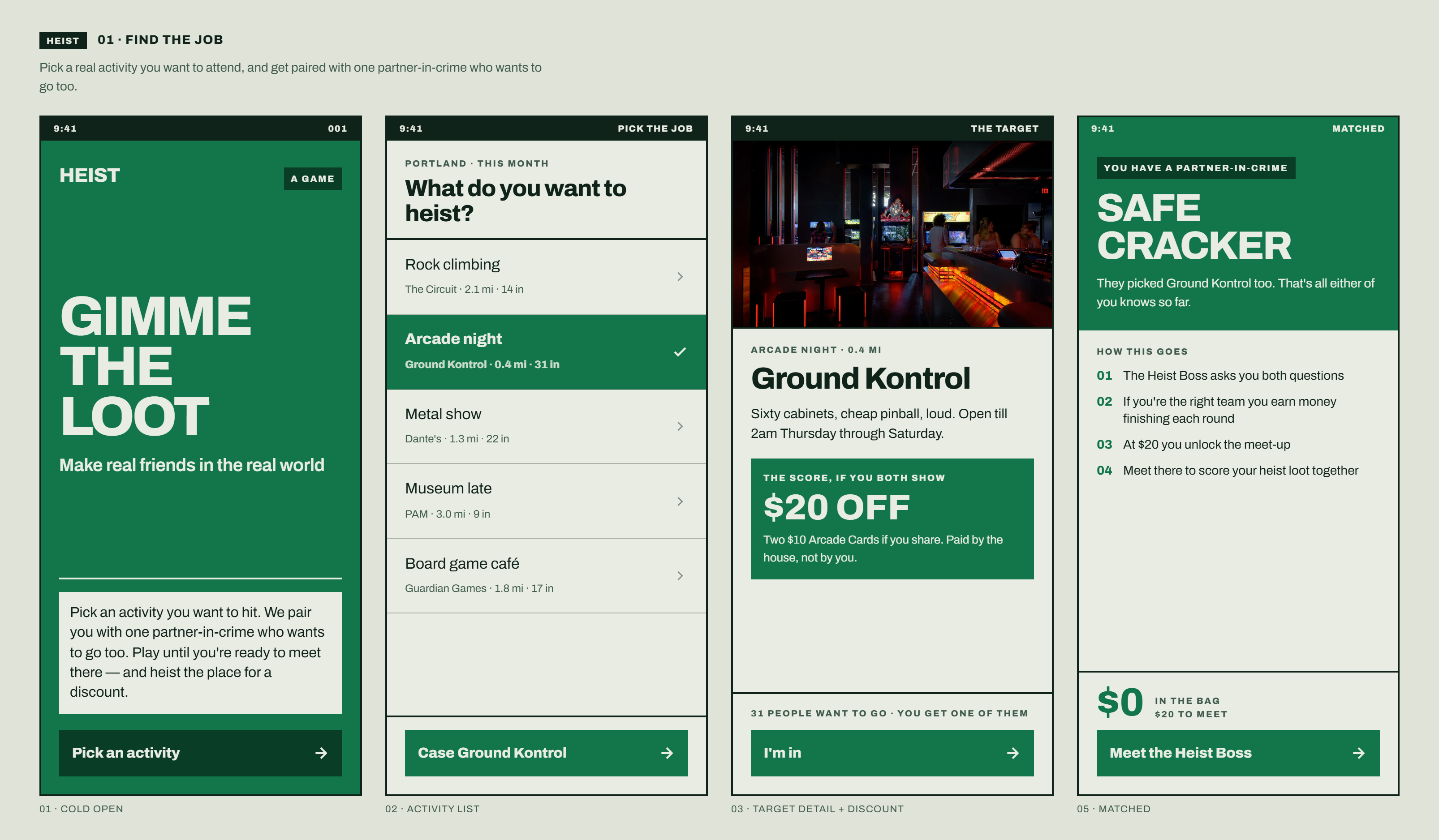
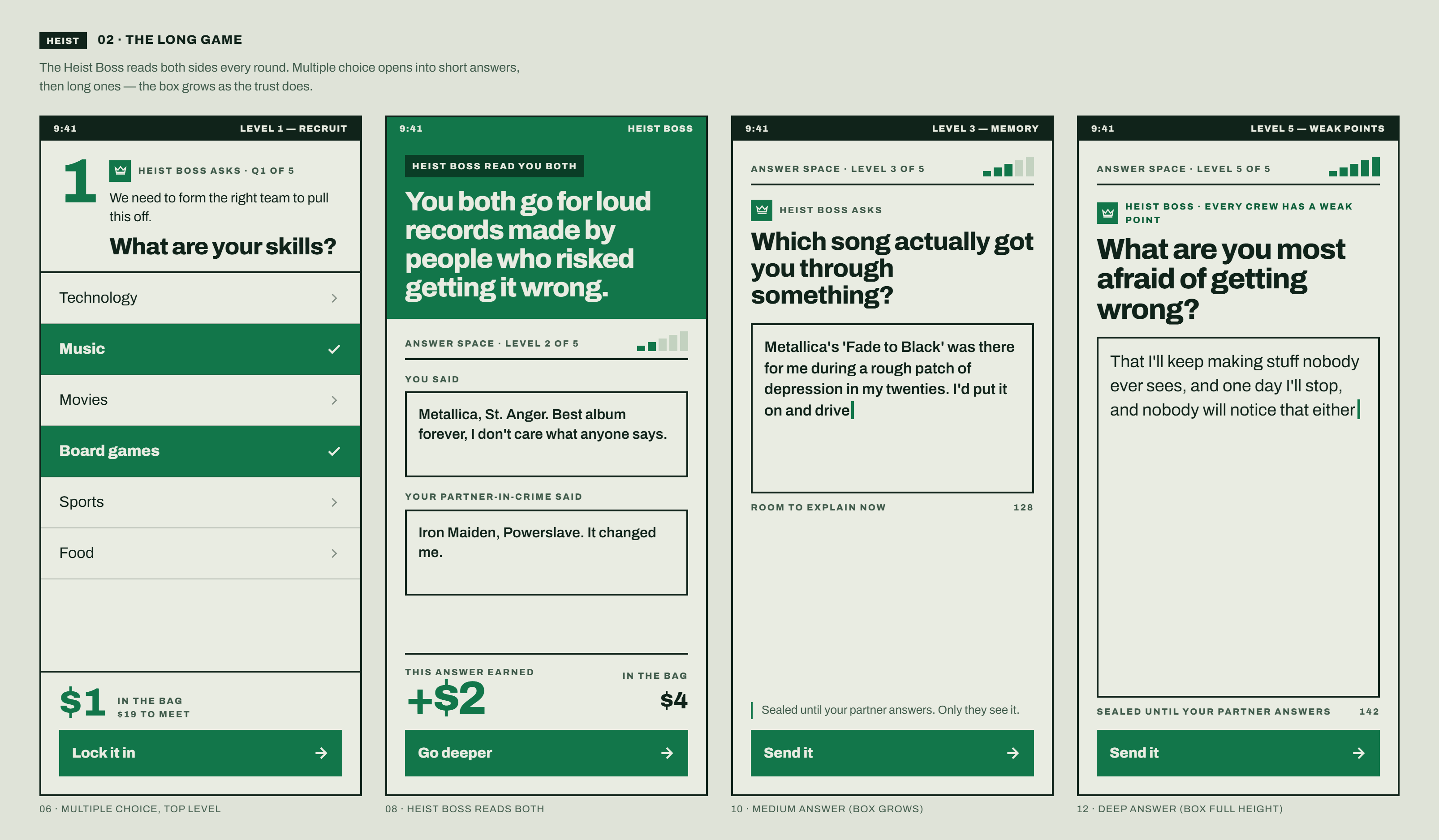
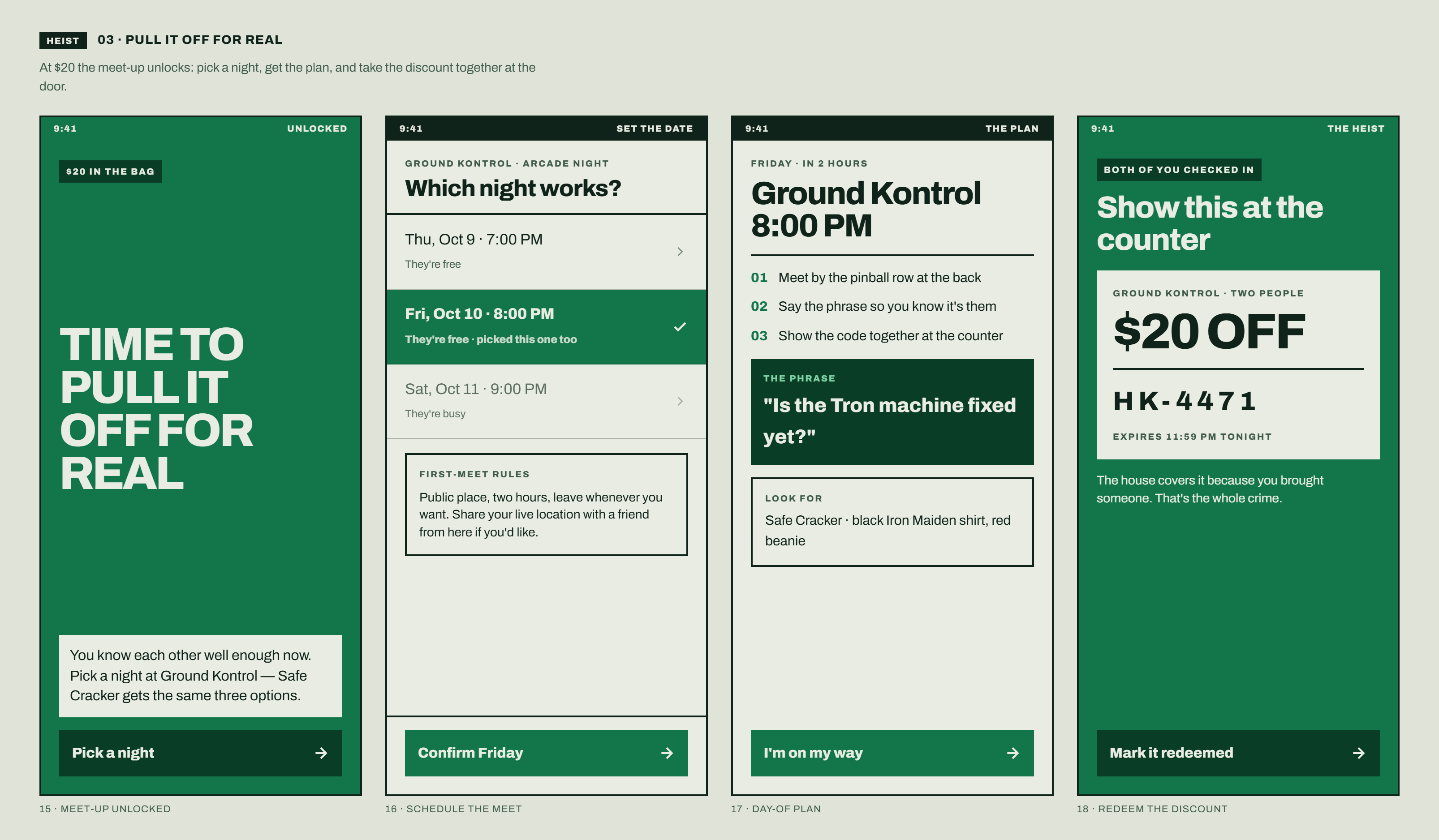
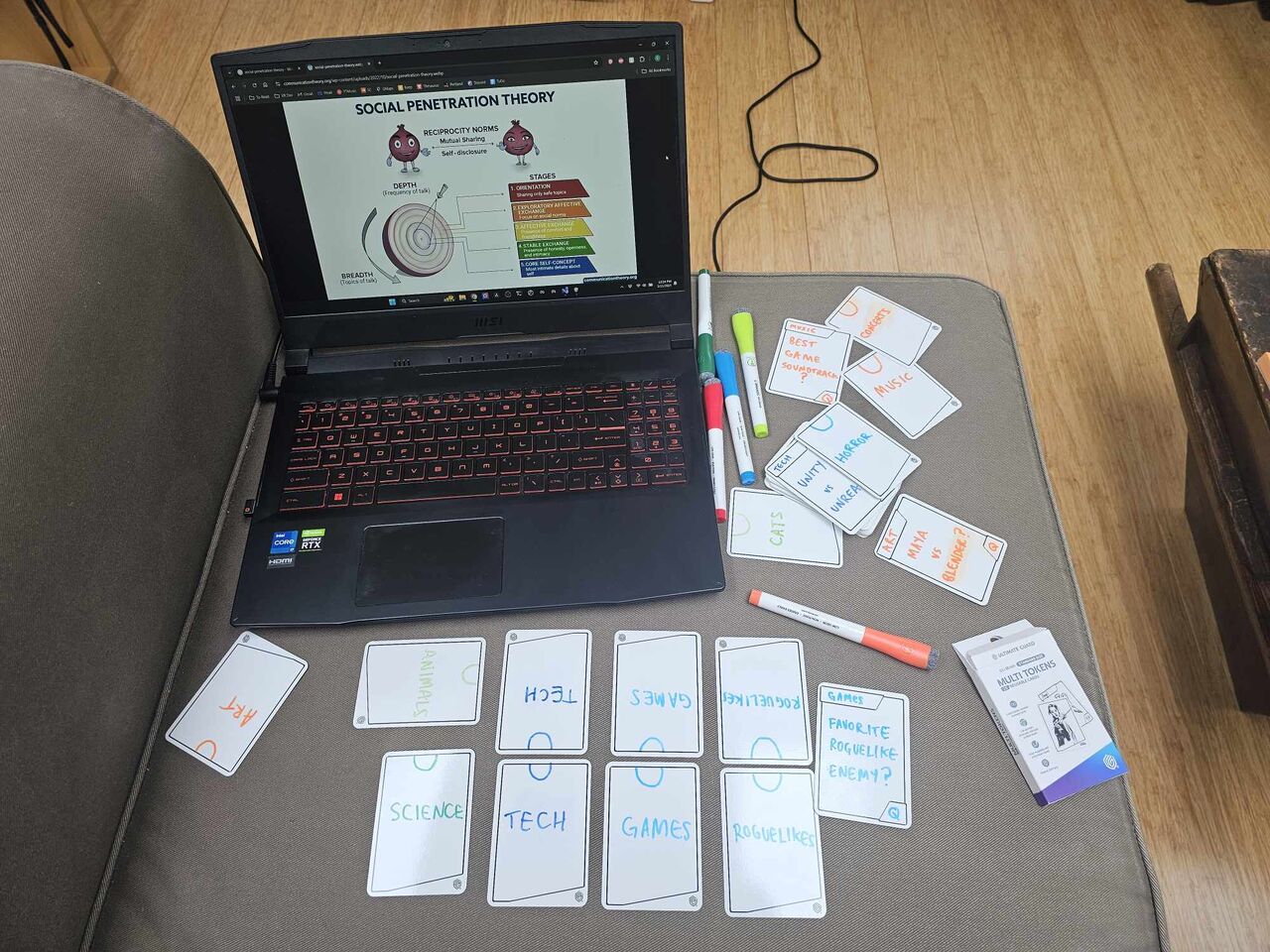
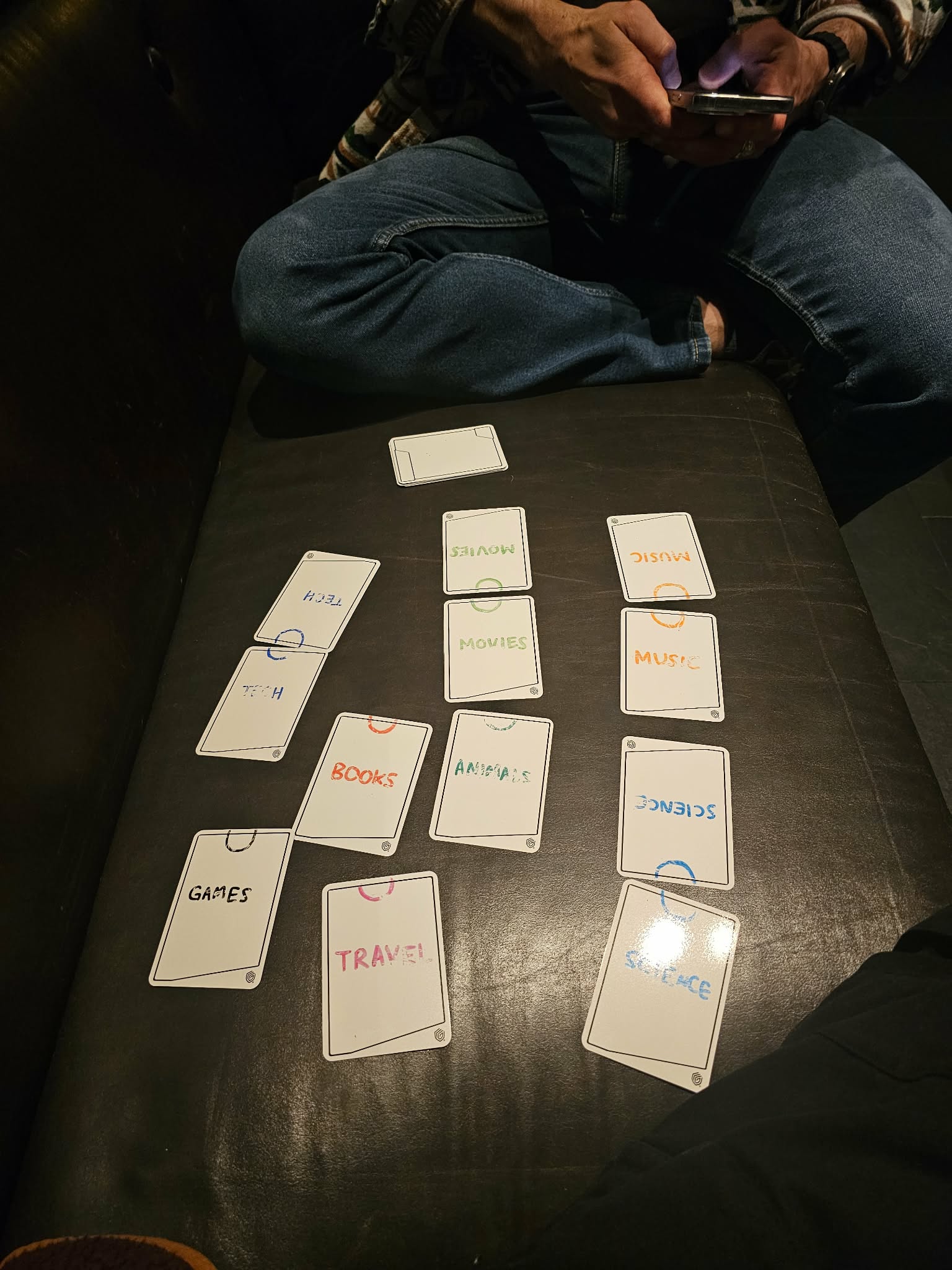
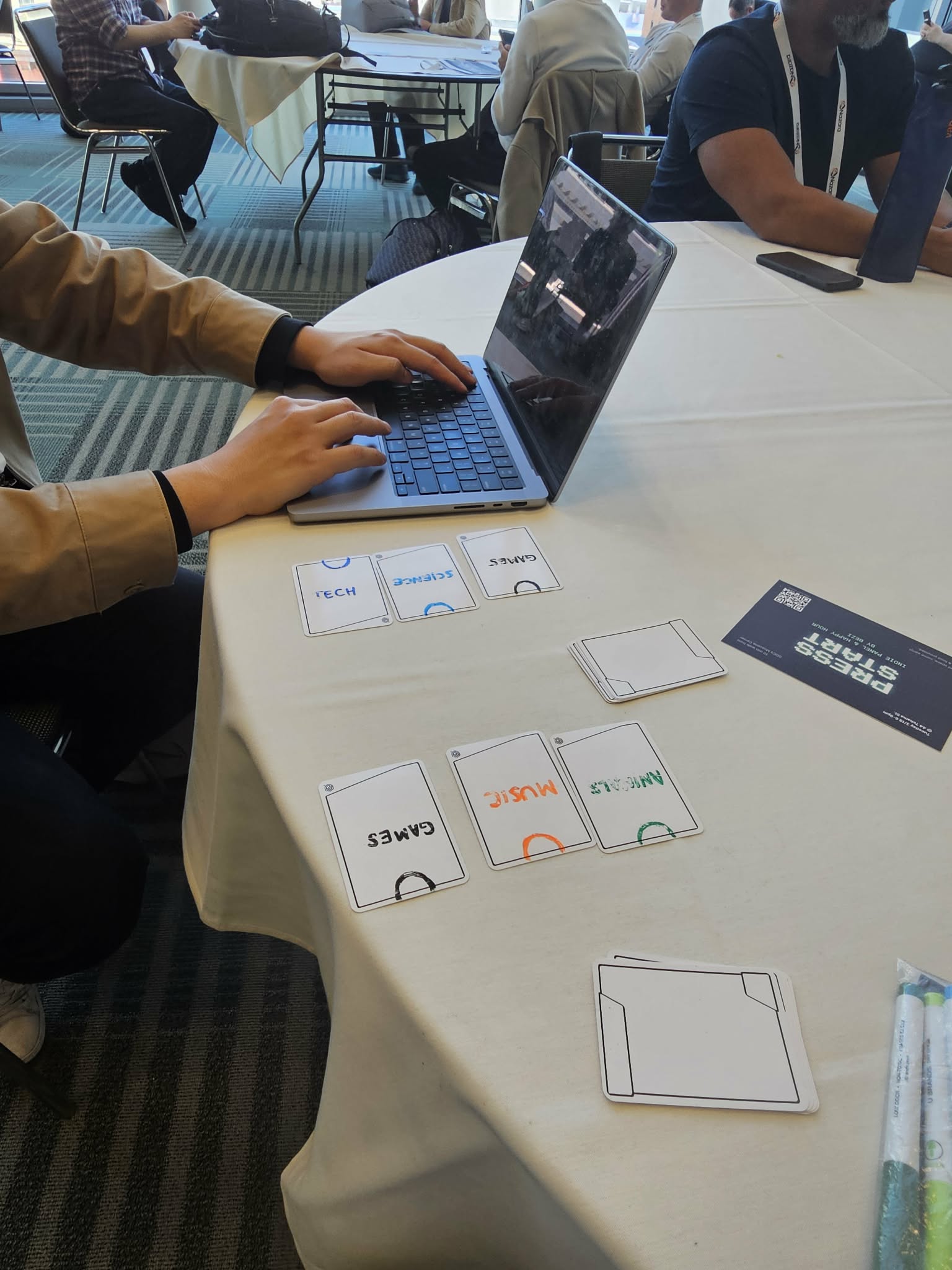
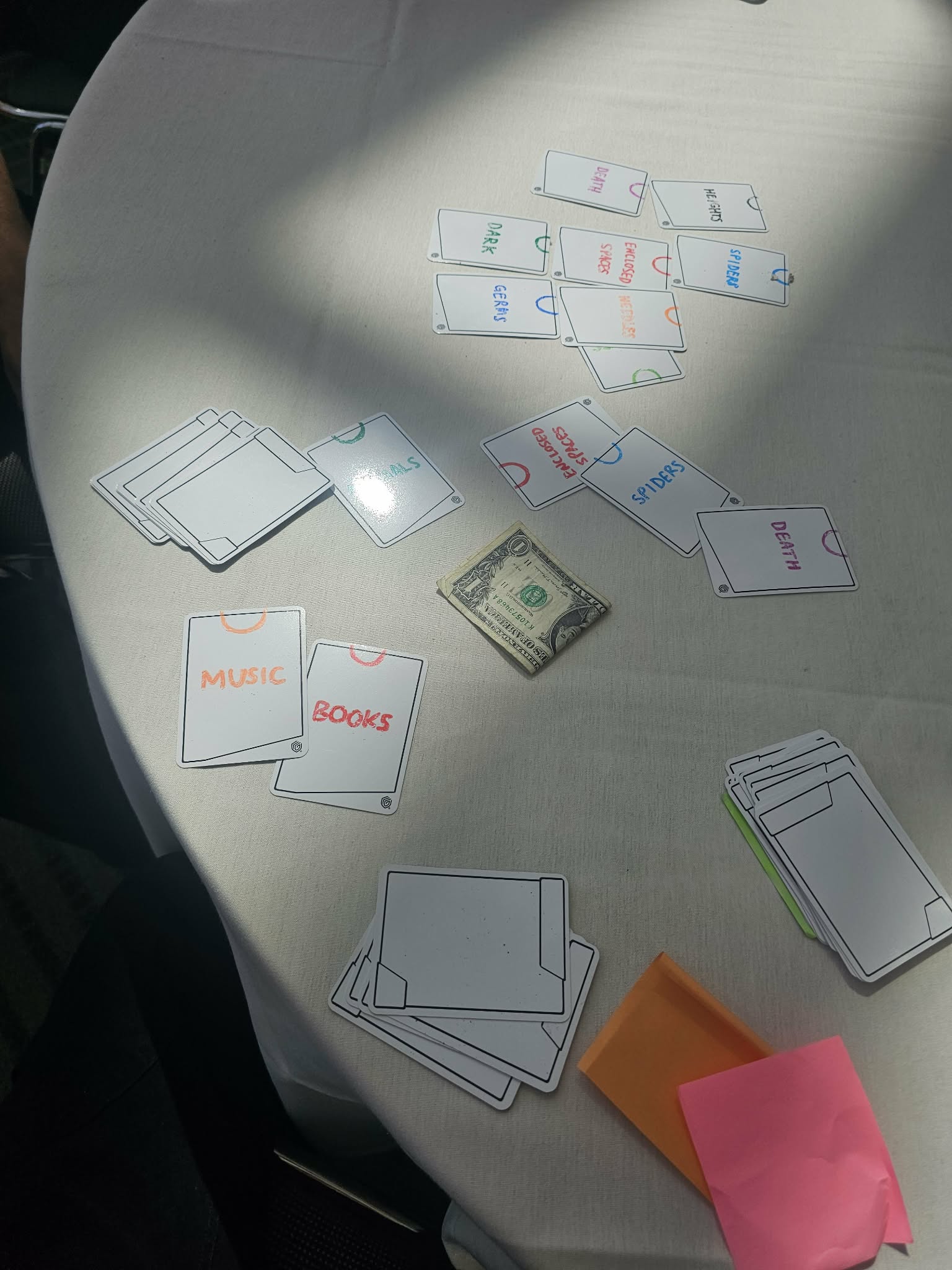
Before any of it was an app, it was a deck of blank whiteboard cards. I drew the game onto them in marker and took them to GDC, so I could sit two strangers down and watch it work or fail in front of me.
The cards wipe clean, so I redrew the rules between playtests and every new pair got the version the last pair had just broken.
Captain Caption
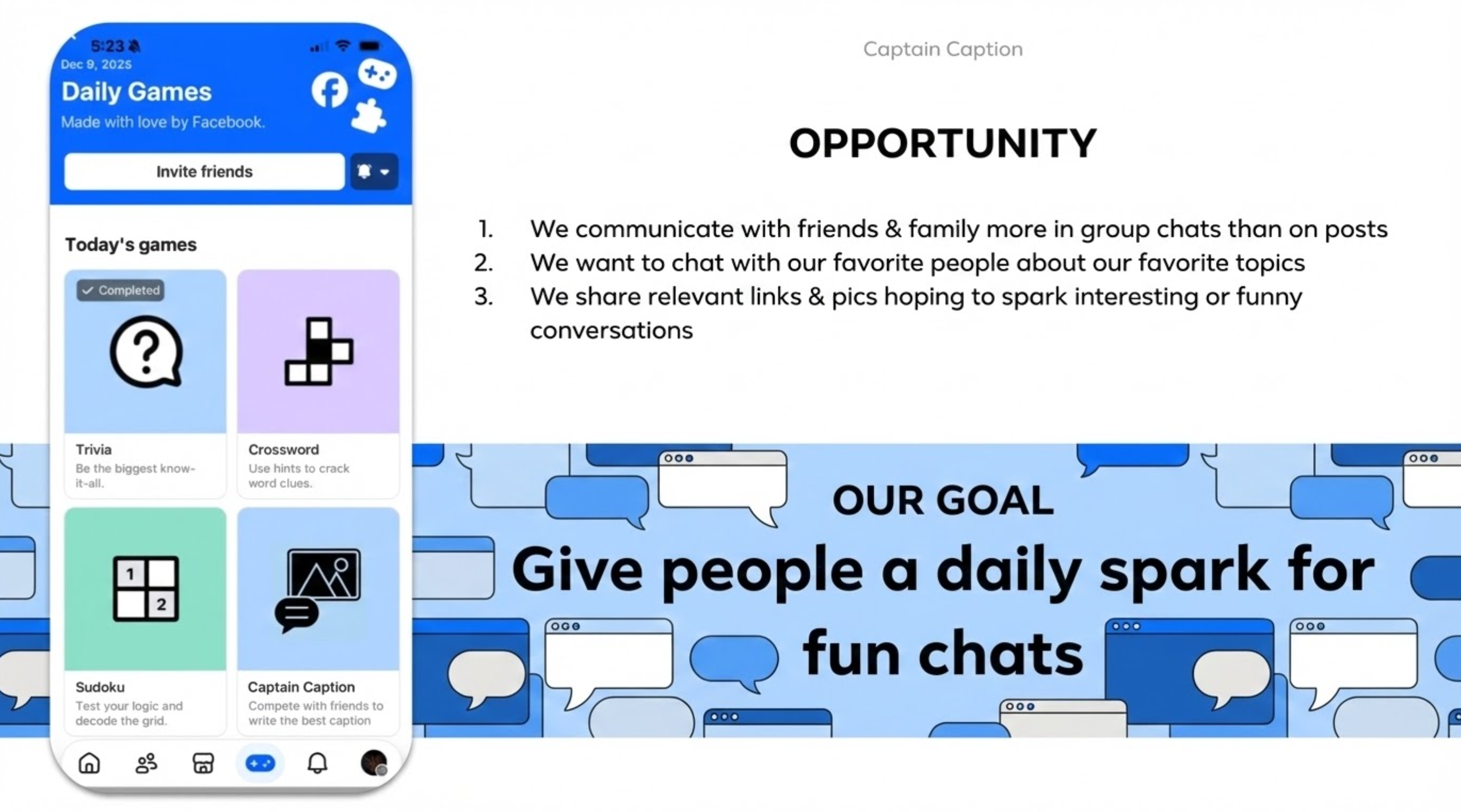
Group chats are where most modern friendship actually lives, and they are almost entirely undesigned.
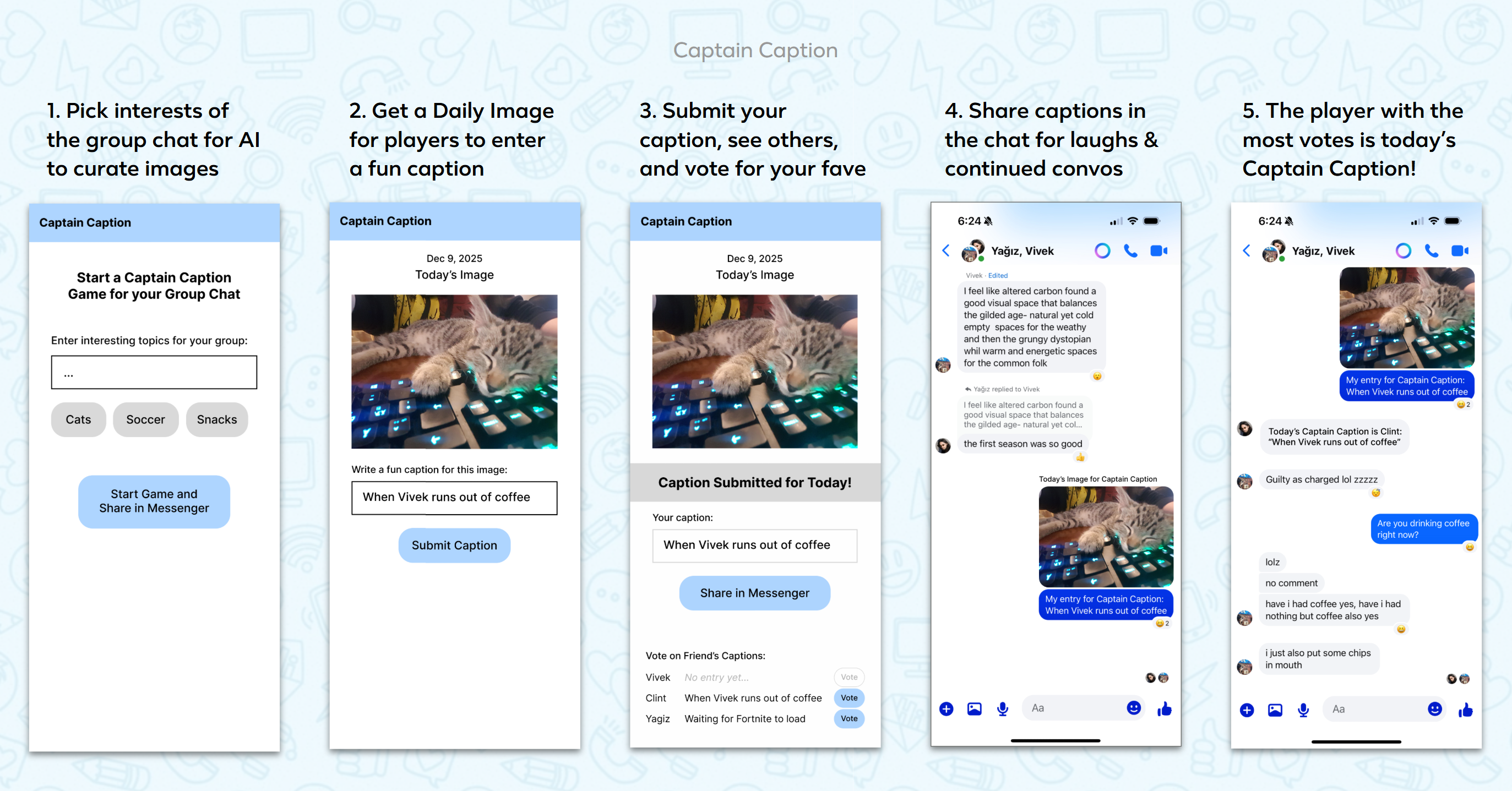
Captain Caption is a daily game for a group chat. The group picks the topics it cares about, an AI curates a daily image from them, everyone writes a caption, the group votes, and whoever wins is that day's Captain Caption.
The game was never the point. The point was the twenty minutes of conversation that happened after someone shared their entry back into the chat.
Venues
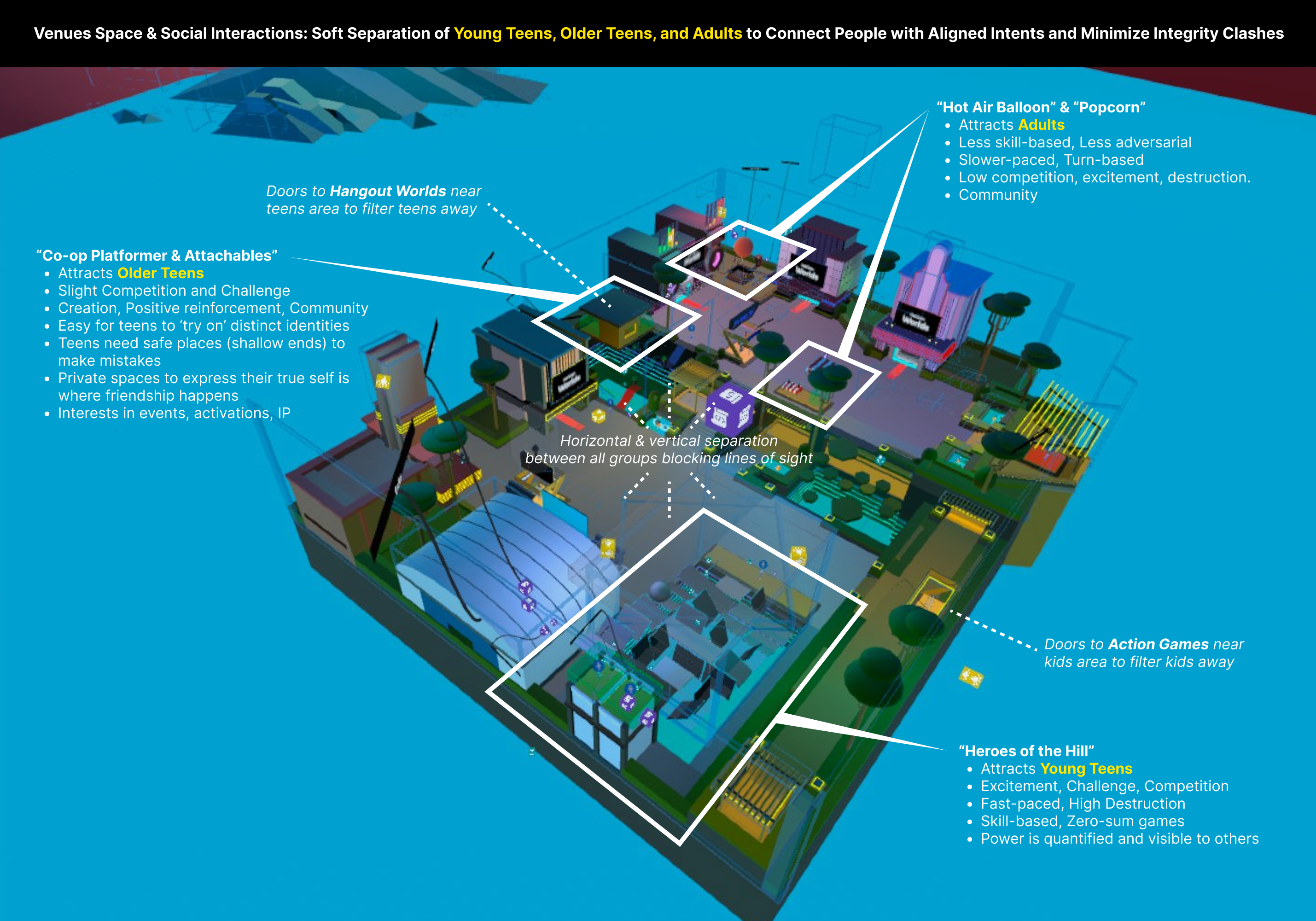
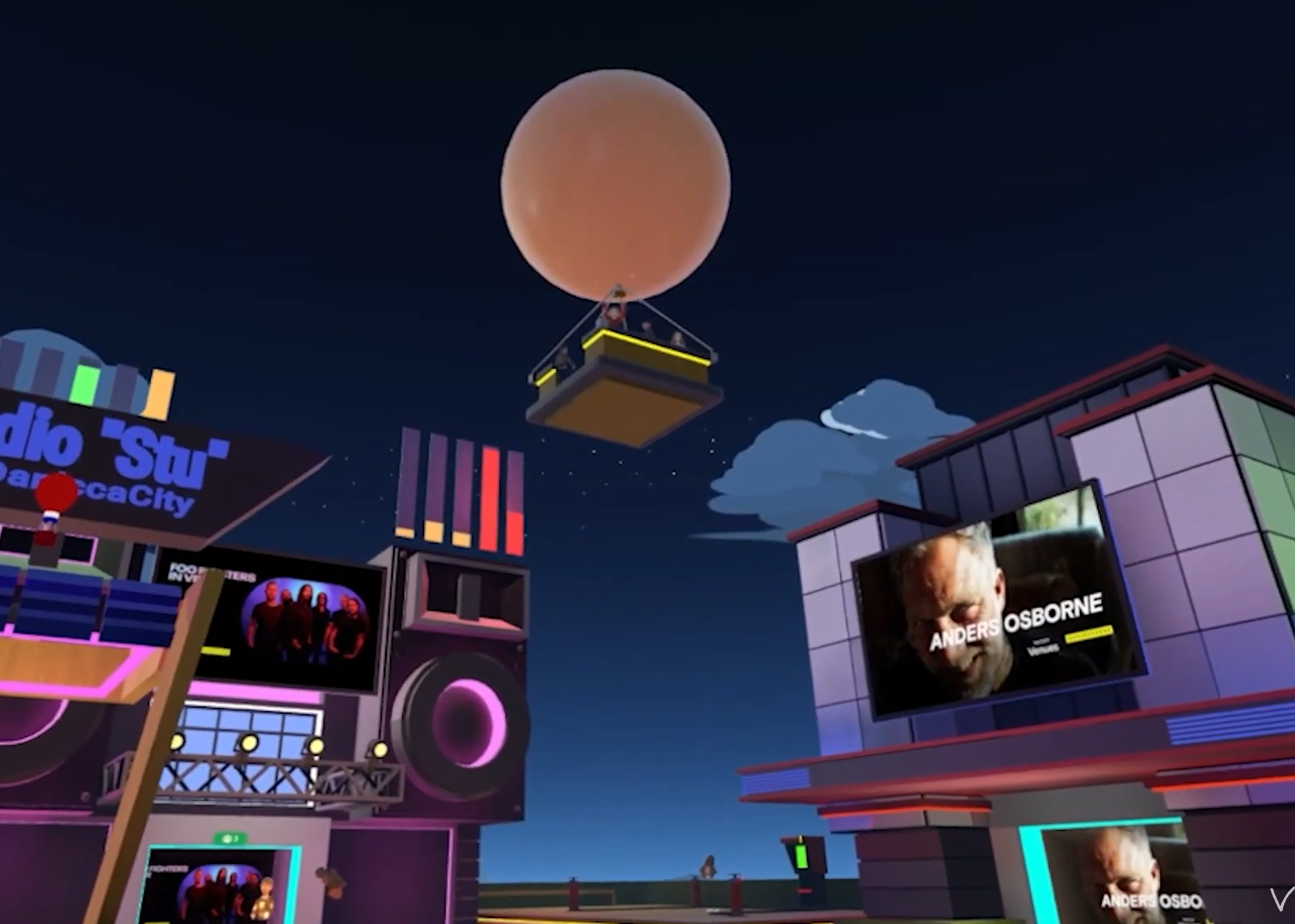
Venues is Meta's public gathering space in virtual reality. It shipped multiple versions and became the highest rated and most visited virtual world Meta has made, with millions of users.
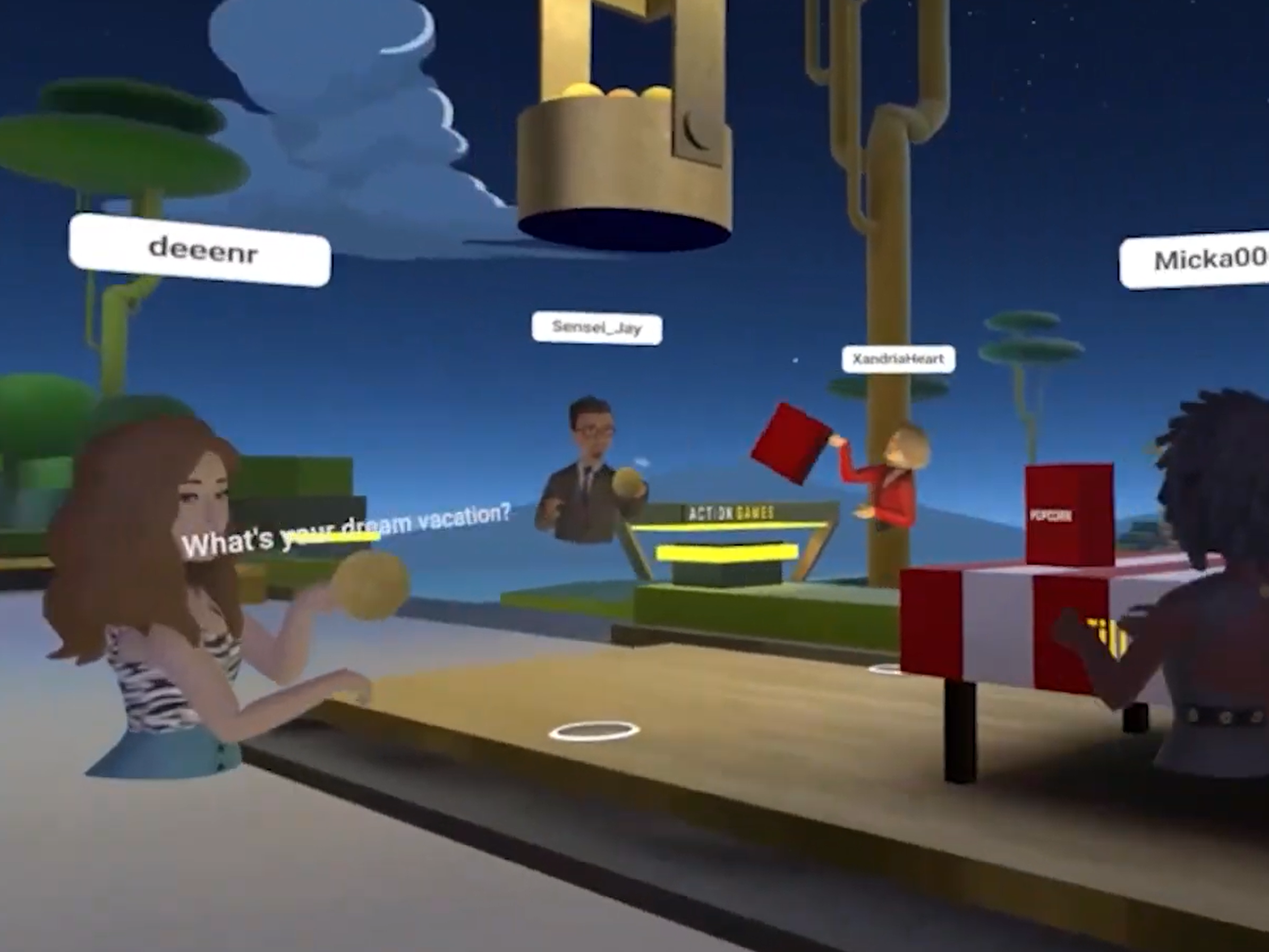
A crowded room does not make anyone feel less lonely. So instead of designing a bigger room, I designed the small machinery inside it. A popcorn machine that handed the people standing near it a question to ask each other, because we need icebreakers to start. A hot air balloon that took four people to inflate, then rose and drifted over the world with awe-inspiring views, a cozy nook, and a slow clock for an intimate conversation. Collaborative games that gave strangers a shared goal to break the ice and time for snowballing conversations to get to know each other.
Duet
Two people meet in a silent safe space and cannot speak to each other. They build trust, abilities and communication by cooperating. Only after a full adventure together do they earn voice chat, and find out who they have been bonding with.
Friendship is a journey, not a button.
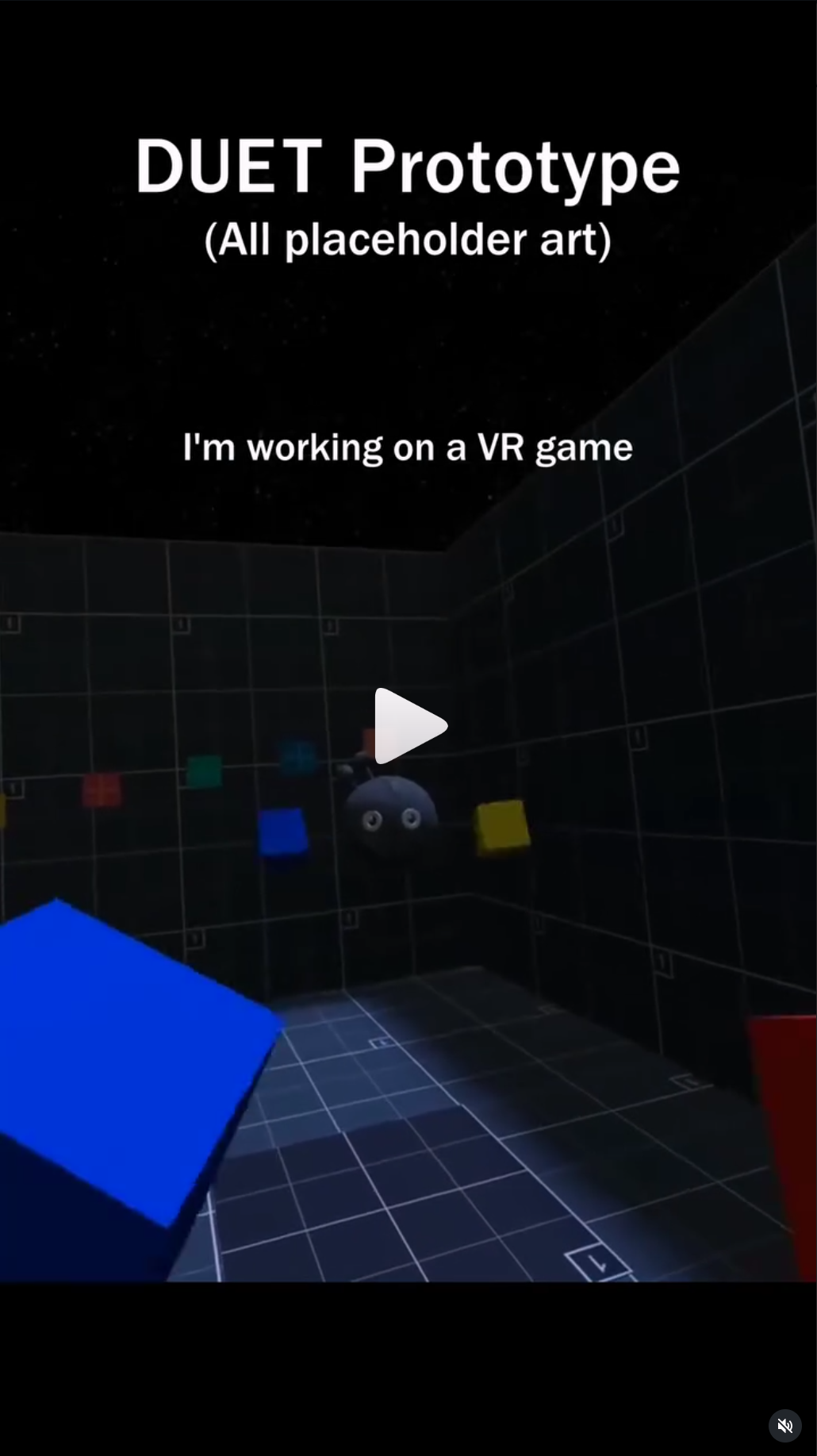 Watch with sound
Open the reel on Instagram
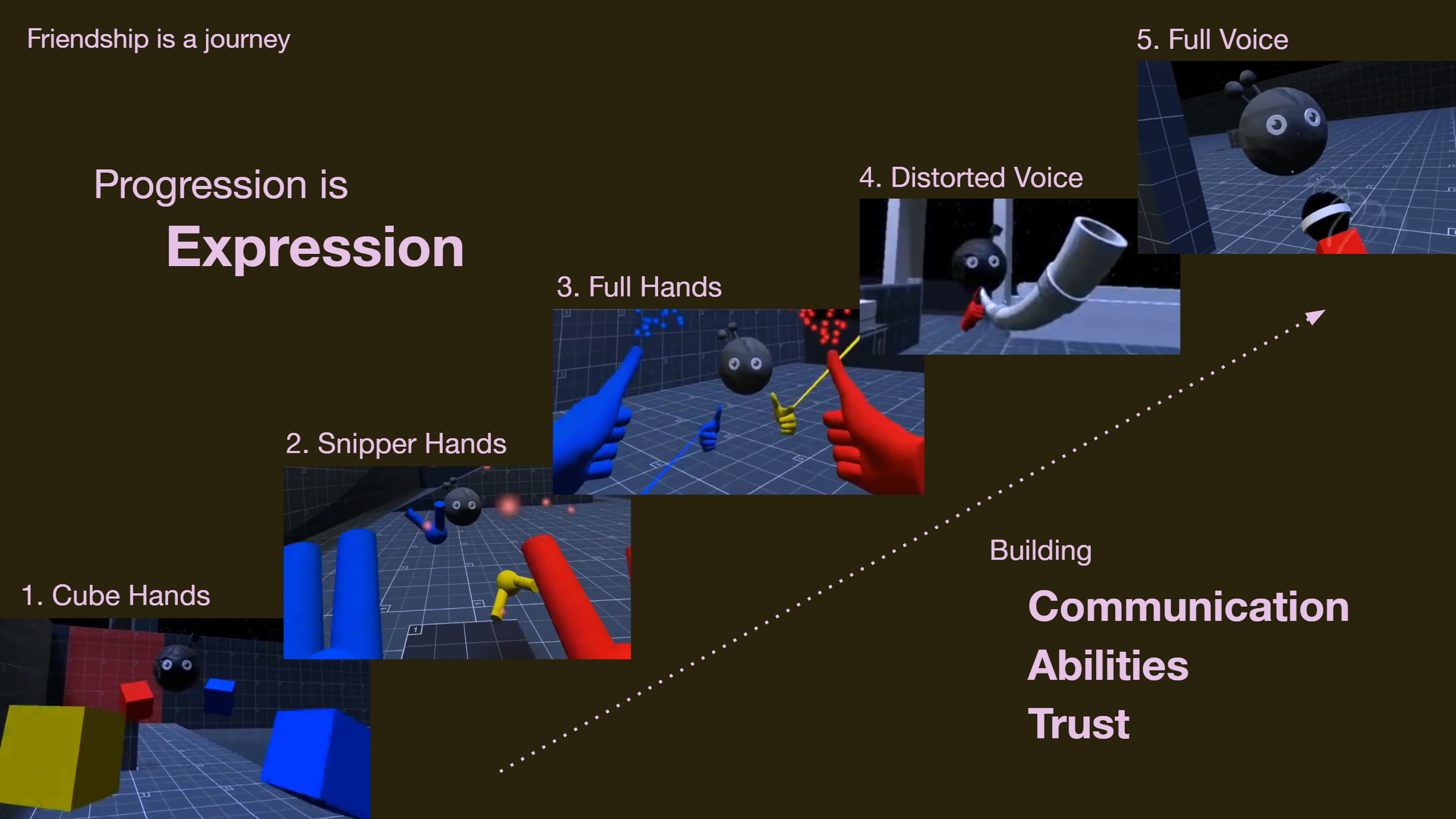
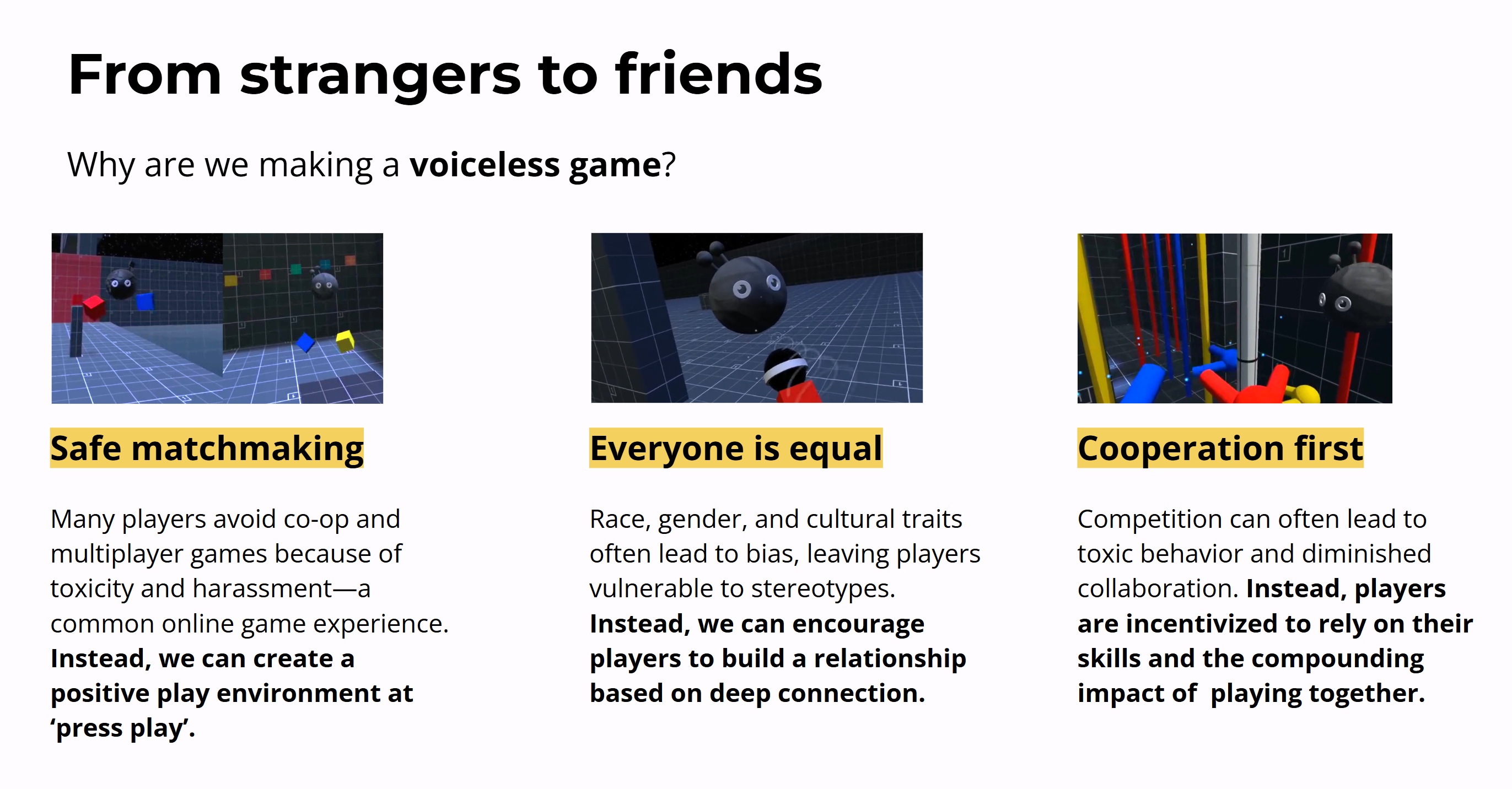
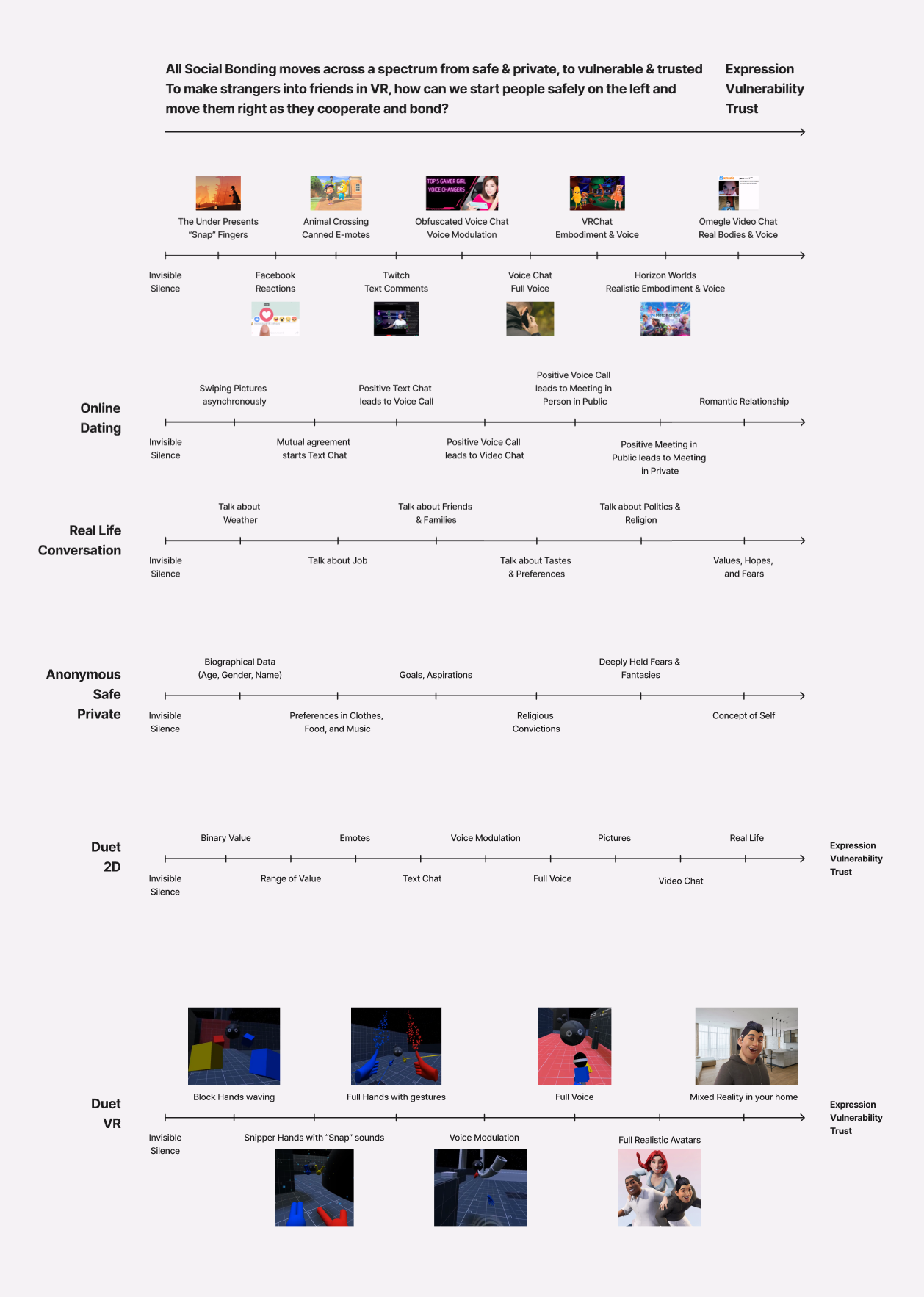
The sequence came out of mapping how bonding already works elsewhere. Online dating, ordinary conversation, and existing digital products all move along the same spectrum, from safe and private to vulnerable and trusted.
Plotting Duet on that spectrum told me where to start people, silence, and what to hold back until they had earned it.
Out of many, one people.
I am an American who grew up in Jamaica, with a Chinese mother and an Indian father, both raised in Guyana. As the youngest of four I observed that people are differently similar and similarly different. Our house had culture clashes, language confusion, a cacophony of accents. It also had the thing Jamaica puts on its coat of arms: out of many, one people.
Then the internet arrived in my childhood. I went into chatrooms and talked to strangers across the globe, and I thought this is going to bring the world together just like my family. It mostly didn't happen. We got scale instead of empathy.
From 2011 to 2016 I was Senior Creative Technologist at Harmony Labs, working with neuroscientists, social scientists and data scientists on how narratives influence society, then designing products that scaled what we found. I built Narrative Observatory there, still in use today by the Gates, MacArthur and Robert Wood Johnson foundations. Then six years at Meta.
What I took from both is that the mechanisms of trust and connection are knowable, and almost none of what is known makes it into the products people actually use. Closing that gap is what I want this chapter to be about.